Hawke's Bay Wineries
An easy drive from Ahuriri
Hawke's Bay is New Zealand's oldest wine region, producing premium Syrah, Chardonnay, and Bordeaux-style reds across diverse sub-regions including the Gimblett Gravels, Bridge Pa Triangle, and the coastal Te Awanga strip. Cellar doors at estates such as Mission Estate, Craggy Range, and Elephant Hill offer tastings and vineyard restaurants within an easy drive of Ahuriri.
The oldest wine region in New Zealand
Hawke's Bay has been producing wine since 1851, when French Marist missionaries planted the first vines at what is now Mission Estate near Taradale. That founding estate is still operating and still producing, making it New Zealand's longest continuously running winery. The region has since grown to encompass well over a hundred producers across a varied landscape of river terraces, coastal plains, and inland gravels.
The climate here leans warm and maritime, with long growing seasons well suited to late-ripening reds and full-flavoured Chardonnay. Syrah, Merlot, Cabernet Sauvignon, and Bordeaux-style blends are the signatures. The region has a distinct identity from Marlborough — less aromatic-white-driven, more structured and red-leaning, and with a cellar-door culture that tends toward the unhurried.
Sub-regions worth knowing
The Gimblett Gravels is the most talked-about terroir in the region — an area built on the stony bed of the old Ngaruroro River, where free-draining alluvial gravels absorb the summer heat and radiate it back through the night. Syrah and structured red blends from this zone tend toward darker fruit, pepper, and spice. The Bridge Pa Triangle, on the Heretaunga Plains, shares similar warm-gravel characteristics with a slightly different producer mix.
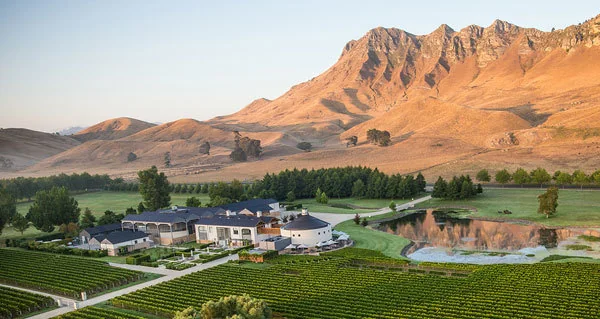
Down on the coast, Te Awanga and Haumoana give a different mood: modern architecture, ocean views, and wines that thread maritime freshness through the natural ripeness of the region. Elephant Hill is the best-known name in this strip, and its setting — vines and sea within the same sightline — makes for one of the more distinctive cellar-door experiences in the country.
Planning a day in wine country
Most key cellar doors are within a comfortable drive of Ahuriri — the closer estates reachable in roughly fifteen to twenty minutes, the further ones in under forty. The practical advice from the region applies directly: plan for two or three stops rather than trying to cover everything, allow time at each for conversation as well as tasting, and arrange a designated driver or book a local wine tour if you intend to taste seriously. Drink-driving enforcement on rural roads is not casual.
The day works naturally as a loop: start with one of the heritage estates, move through the plains to the Gimblett Gravels zone, and finish on the coastal strip at Te Awanga before the drive back. Cellar doors generally operate through the morning and into the afternoon on most days, but hours vary seasonally and by estate — bookings are worth making for groups or any estate with a restaurant.
Through the seasons
The vineyards look different at every point of the year. In summer the rows are green and full, fruit hanging beneath shade nets; in autumn the same vines burn orange and gold, the air carrying a faint tang of ferment and damp soil as harvest runs. Winter strips the vines to bare wood under wide Hawke's Bay skies, and spring brings rapid growth again. Any season has its own quality, and the cellar-door culture operates year-round.
Getting there from Ahuriri
The wine country spreads in a broad arc south and south-west of Napier. From Bluewater, the closest estates are reachable in roughly fifteen to twenty minutes; the Gimblett Gravels zone and the coastal wineries at Te Awanga are perhaps twice that. The drive itself is part of the experience — the roads pass through orchard country, river terraces, and the flat, heat-shimmering gravels that explain the character of the wines.
Most winery restaurants and cellar doors are concentrated enough that a focused day covers several stops without feeling rushed. The practical planning question for any wine-country day is designated driver or tour operator. NZ drink-driving limits are enforced, and rural roads between cellar doors are not suited to public transport.