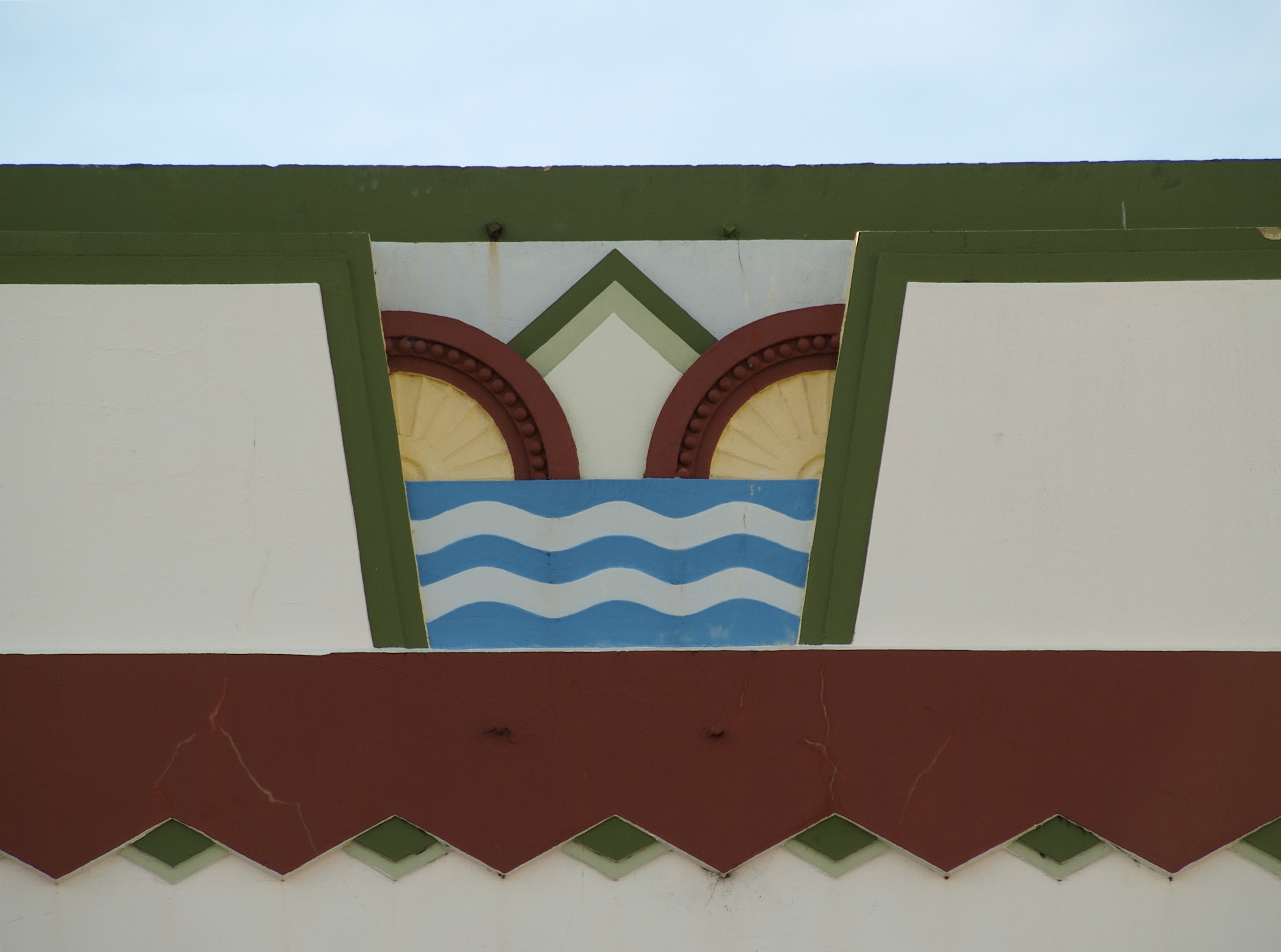
Napier Art Deco Quarter
A short drive from Ahuriri
Napier's city centre was rebuilt almost entirely after the 1931 earthquake, leaving one of the most concentrated collections of 1930s Art Deco, Spanish Mission, and Stripped Classical architecture in the world. An extensive concentration of 1930s heritage buildings lines Tennyson and Emerson Streets. The Art Deco Trust runs guided walking tours from its centre in Tennyson Street.
Born from disaster
On the morning of 3 February 1931, a magnitude 7.8 earthquake struck Hawke's Bay, killing 256 people and reducing roughly 90 per cent of Napier's commercial centre to rubble and fire. What followed was one of the most remarkable civic rebuilding efforts in the Southern Hemisphere. Within two years, the city had risen again — almost entirely in the architectural languages fashionable in the early 1930s: Art Deco, Spanish Mission, and Stripped Classical. The speed of the rebuild and the relative uniformity of the era mean that Napier's city centre reads as a coherent whole rather than a patchwork of periods.
The earthquake also physically reshaped the land. The seabed lifted, the Ahuriri Lagoon drained, and the flat terrain where the airport and modern suburbs now sit was created from nothing. Guests coming from Ahuriri into central Napier are, in a sense, crossing land that did not exist before that morning in 1931.
The architecture up close
Tennyson and Emerson Streets carry the densest run of heritage facades. The Daily Telegraph Building opened in 1932 and shows off bold colour blocking and zigzag ornament that sits unexpectedly well for a newspaper office. The Art Deco Masonic Hotel faces Marine Parade with strong horizontal lines and a long first-floor balcony that still functions as a social stage. The Napier Municipal Theatre blends Art Deco geometry with Spanish Mission curves, and its lobby interior continues that layering into the decorative scheme.
What sets Napier apart from other cities that happen to have Art Deco buildings is the deliberate integration of Māori design. A small number of the rebuild-era buildings incorporate kowhaiwhai rafter patterns and indigenous motifs into their concrete and plasterwork. The ASB Bank building is the most cited example, with interior ceiling friezes painted in traditional red, black, and white that adapt marae rafter patterns to a commercial banking interior. It is a specific local thread in an otherwise international style language.
Walking the quarter
The Art Deco Trust operates guided walking tours departing from their centre in central Napier. Tours run to a regular schedule and typically take between one and a half to two and a half hours. For those who prefer to move at their own pace, self-guided walking maps are available at the Trust centre. The compact geography — the core streets sit within a walkable radius — means that a morning or afternoon is enough to take in the main buildings without rushing.
The Art Deco Festival, held each February, transforms the streets: vintage cars, 1930s dress, jazz from the Sound Shell, and sections of road closed to traffic. Outside the festival, the quarter operates as a normal provincial city centre with the 1930s buildings as the backdrop rather than the main event.
Getting there from Ahuriri
The Art Deco Quarter is a short drive from the hotel, passing through or around Bluff Hill into the city centre. It is also reachable on foot via the coastal foreshore path, which adds considerably more time but passes through interesting terrain — harbour edge, then Marine Parade, then the city streets. Most guests find the drive the practical choice for a focused heritage walk, saving the coastal path for a separate excursion.