Marine Parade
A short drive from Ahuriri
Marine Parade is Napier's 3-kilometre oceanfront promenade, lined with century-old Norfolk pines and bordered by the Pacific Ocean. The flat, paved path connects the city's Art Deco streets to foreshore attractions including the Pania of the Reef statue, the Art Deco Soundshell, the Sunken Gardens, and the National Aquarium.
The promenade and what shaped it
Marine Parade runs for roughly three kilometres along the Napier foreshore, with the Pacific Ocean on one side and the city's heritage streetscape on the other. The row of Norfolk pines that lines the path was planted from the 1890s onwards — a deliberate effort by the colonial city to create a formal promenade, and the trees are now over a century old, giving the boulevard a civic scale that most New Zealand coastal towns lack.
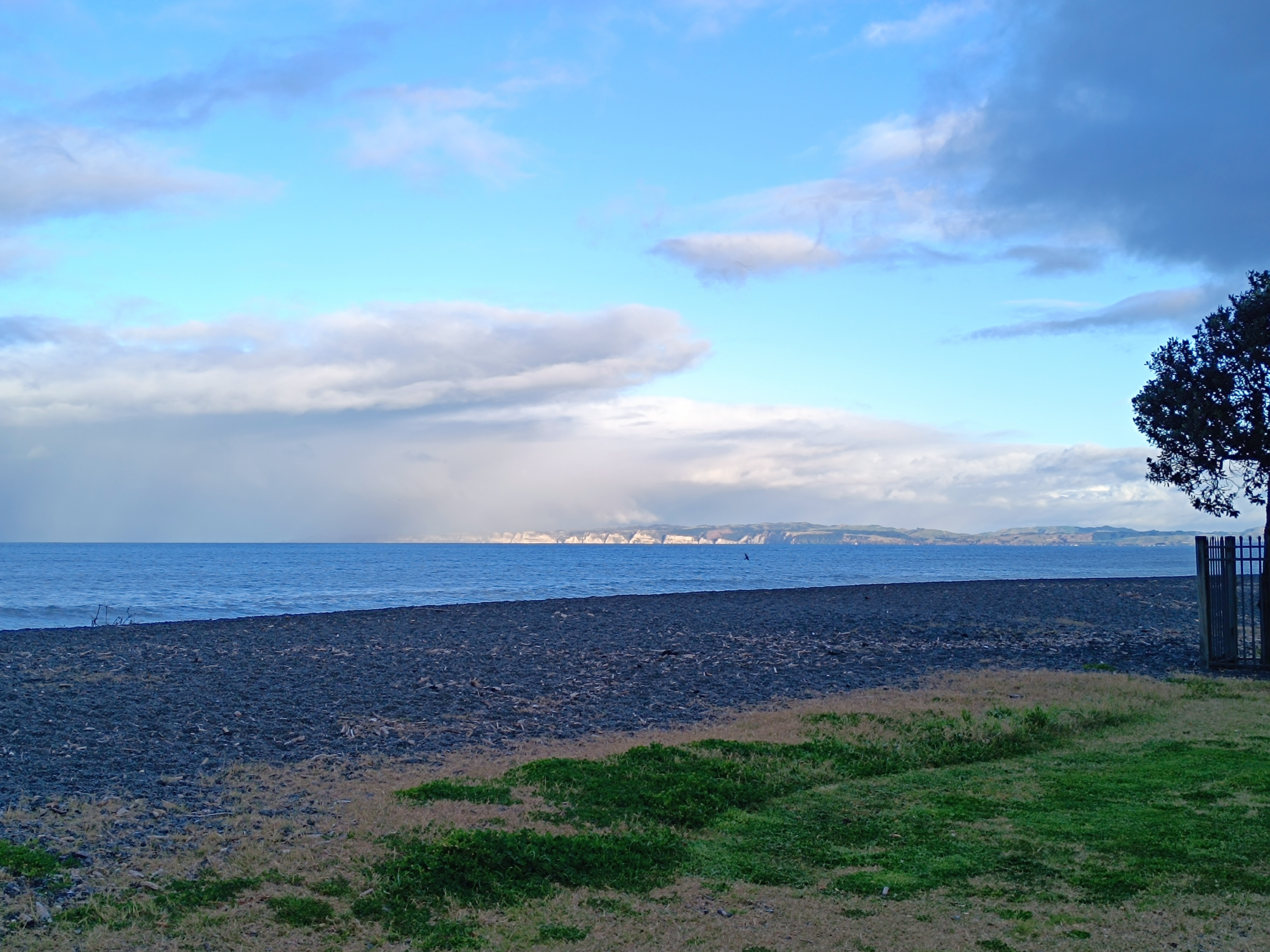
The 1931 earthquake left a permanent mark here too. The seabed uplift pushed the ocean back and stabilised the shoreline, making possible the wide expanse of foreshore development that exists today. The shingle beach below the parade has a steep drop-off and a strong shore break — it is not a swimming beach in the conventional sense, and the undertow is well documented as hazardous. The appeal of Marine Parade is the walk and what lines it, not the water.
Landmarks along the route
Walking the parade from north to south (or the reverse) the landmarks accumulate gradually. The bronze Pania of the Reef statue is one of Napier's most photographed figures — a woman of Māori legend who, according to the story, was drawn back into the sea. The Art Deco Soundshell has been the city's outdoor performance space since the 1930s, flanked by a colonnade that provides its own architectural detail. The Sunken Gardens sit behind the tree line, a sheltered garden space sheltered from the coastal wind.
Further south, the National Aquarium building occupies the foreshore alongside Par2 MiniGolf, the BaySkate facility, playgrounds, and a junior bike pump track. The concentration of family-friendly infrastructure makes this section of the parade a practical destination in its own right rather than simply a route between things.
Walking or cycling from Ahuriri
The foreshore path connects Ahuriri to Marine Parade without requiring a vehicle. The route follows the harbour edge past the marina, around the base of Bluff Hill, and onto the parade itself — a twenty to twenty-five minute walk on flat, paved terrain. The same path works well by bicycle. The connection means that a guest staying at Bluewater can reach the full length of Marine Parade and its attractions on foot, making it a genuine alternative to driving.
Best times to visit
Morning is quieter and the light tends to be cleaner; mid-afternoon brings families and the full mix of foreshore activity. The parade is used year-round — local residents walk and cycle it regardless of season — but the summer months add the energy of the cruise ship season, when the city fills with international visitors and the foreshore becomes correspondingly busier. The path is entirely flat and fully accessible for wheelchairs and prams throughout its length.
The beach itself
The beach that runs below the promenade is coarse grey shingle, steeply shelved where it meets the water. It is not a swimming beach — the shore break and undertow have a documented hazard record, and there are no patrolled swimming areas along the parade. The beach is used for coastal walks, photography, and simply sitting above the water line, but entering the surf here is not advised. The ocean-facing aspect is nonetheless part of what makes the promenade what it is: the combination of wild exposed coast and the ordered, tree-lined civic walkway above it is the contrast that defines the place.